Ypres battlefield tour, a private day around the Ypres Salient
An Ypres battlefield tour covers the most fought-over few miles of the Western Front. For four years the town sat inside a bulge in the line, the Salient, with German positions on the low ridges to the north, east and south. Five major battles were fought here between 1914 and 1918, and the town itself was shelled to rubble and rebuilt afterwards, stone by stone.
What makes Ypres unusual is how compact it all is. Cemeteries, craters, bunkers and memorials lie within half an hour of the market square, which means a single private day can take in both sides of the line and several years of the war.
I’ve had the honor of guiding visitors from all over the world including many from the United States who come to Belgium to explore its historic battlefields and gain a deeper understanding of the events that shaped our history.
No two days are the same, but most are built from the same handful of places. The order depends on where you start, the weather and what brought you here.
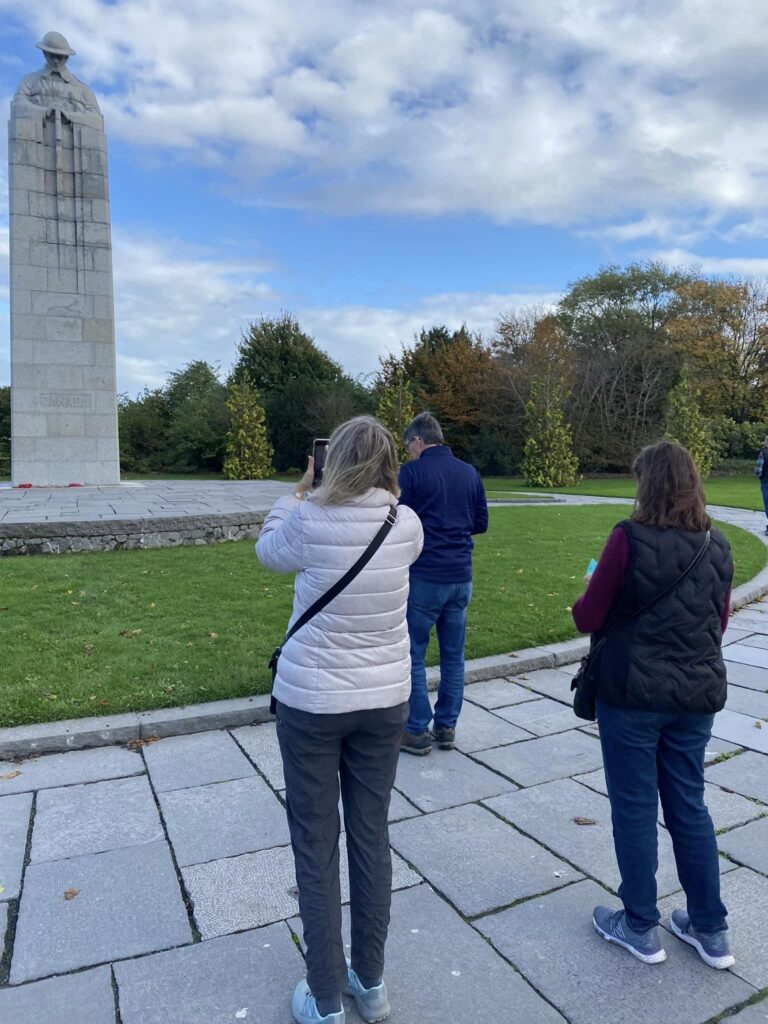
The Menin Gate. The memorial to more than 54,000 Commonwealth soldiers missing in the Salient, on the road the troops took out of the town.
Tyne Cot. The largest Commonwealth war cemetery in the world, on the Passchendaele ridge.
Hill 60. A scrap of high ground fought over from 1915 to 1917, still cratered by the mines dug beneath it.
Essex Farm. The dressing station where John McCrae wrote “In Flanders Fields” in May 1915.
Langemark. The German cemetery, dark and quiet, with more than 44,000 burials.
The In Flanders Fields Museum. In the rebuilt Cloth Hall on the market square.
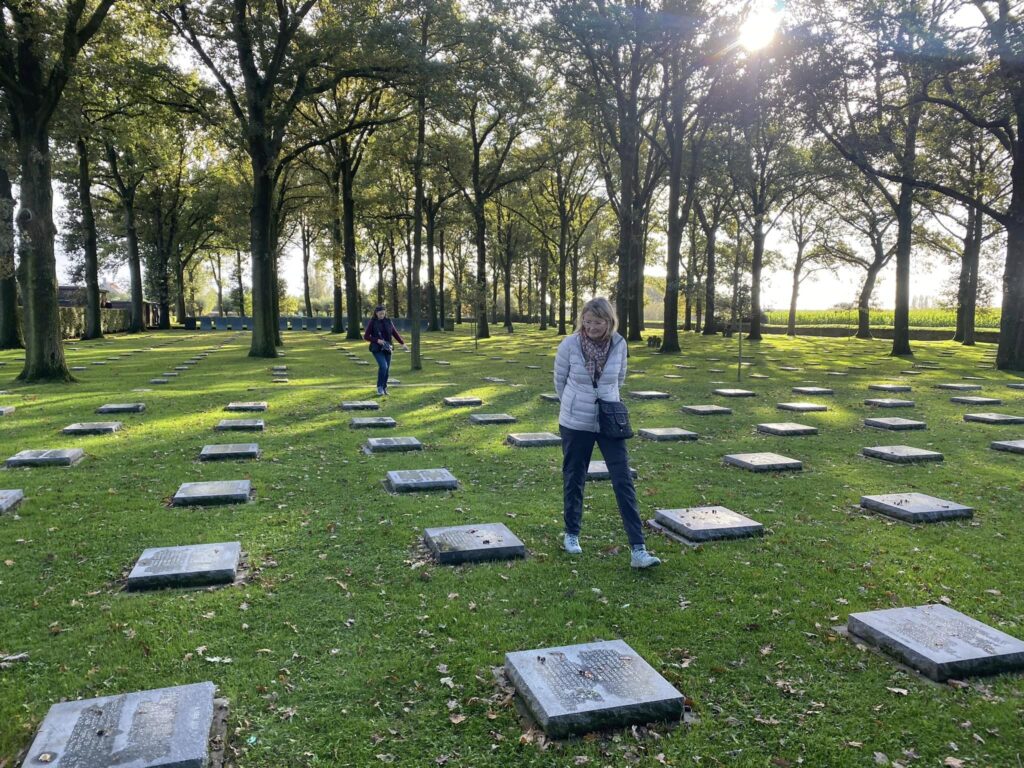
Many visitors arrive knowing the British story and leave having seen the German one too. Langemark German Military Cemetery holds the dead of the first battles of 1914, many of them young volunteers, under oak trees and flat stone slabs, with a mass grave at its centre. The contrast with the white Portland stone of the Commonwealth cemeteries says a great deal about how each side remembered.
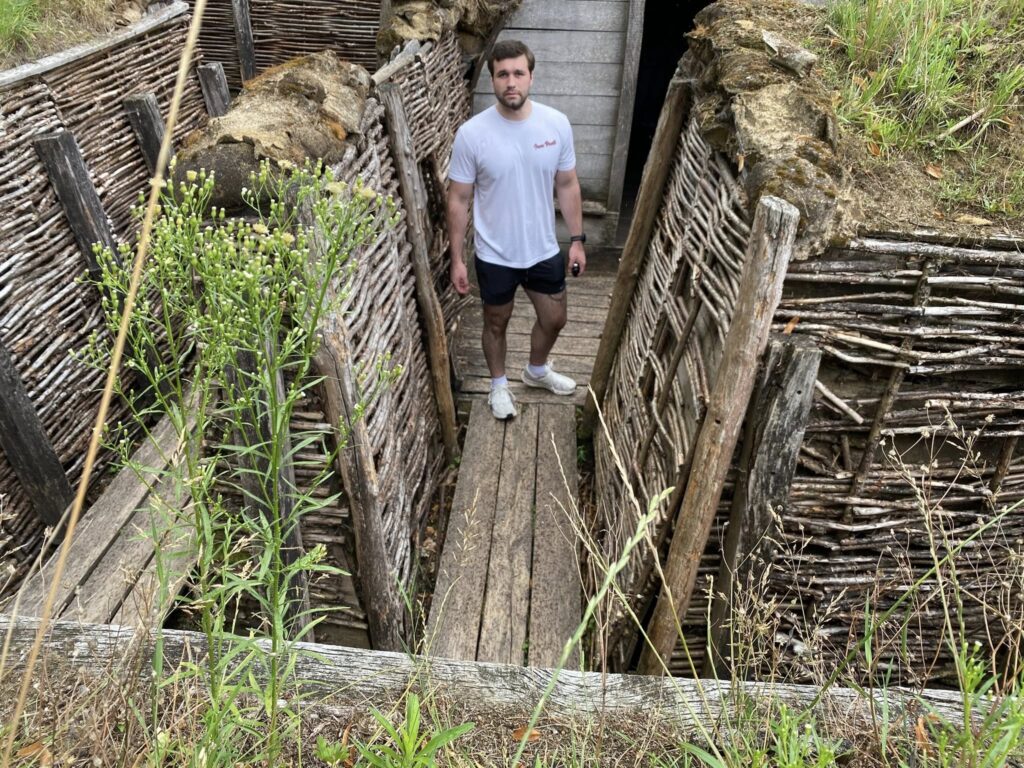
At Hill 60 the two lines were so close that the war went underground. British, Canadian and Australian tunnellers worked beneath the German positions, and the craters they left are still there.
Ypres itself is part of the tour. The Cloth Hall was a medieval trading hall, destroyed by shellfire and rebuilt after the war; today it houses the In Flanders Fields Museum, the best introduction to the war in this region. A morning there before going out to the Salient works well for groups who want the context first. From the Menin Gate a path runs along the ramparts to the small Ramparts Cemetery at the Lille Gate, beside the moat.
Coach tours of the Salient run from Ypres and from further afield, and they do their job: a fixed route, a set time at each stop, a seat on a bus with thirty or forty others. If you have no particular connection and a few hours to spare, that can be enough.
A private tour is different in a few ways that matter. The route is yours, so a relative’s grave in a small cemetery off the main roads is no detour. The time at each stop is yours too. Questions are answered when they come up, not at the end of a commentary. And smaller vehicles reach places coaches cannot. Every tour I run is private to your own party, whether that is two people in the minibus or a school group on a coach of fifty.
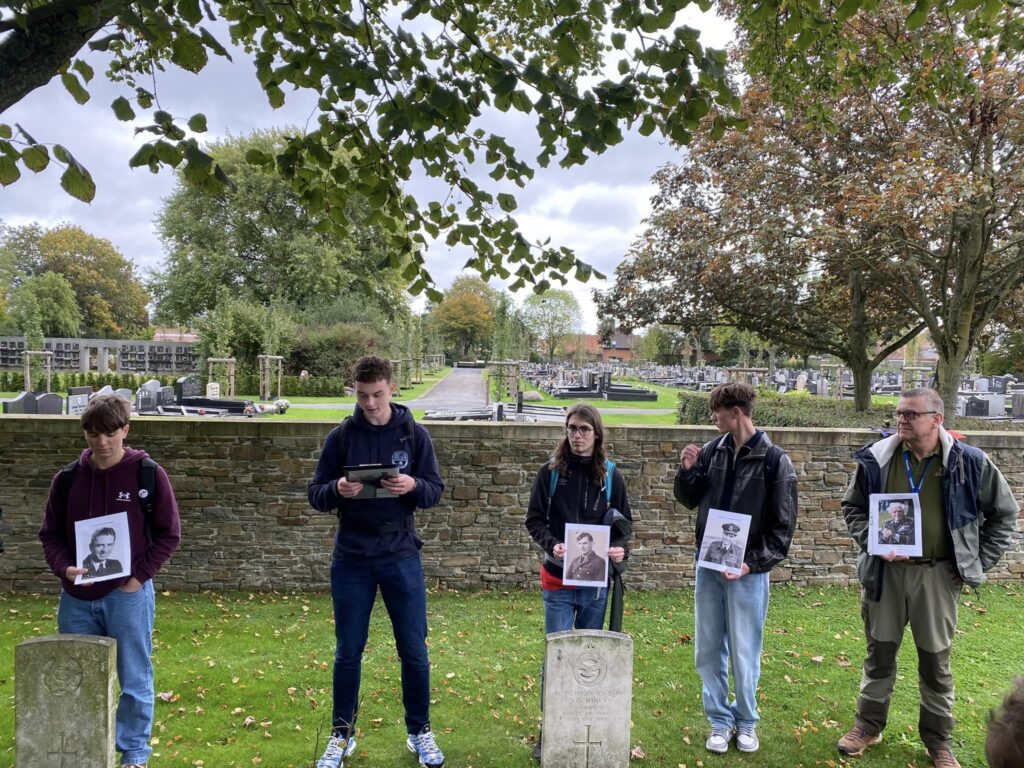
Many Ypres visitors come because of a name. Send me what you have, the regiment, a date, a letter home, and the day is planned around where he served and where he lies. The process is explained on the page about tracing an ancestor’s war grave. If the focus is 1917, the Passchendaele tour goes deeper into the Third Battle of Ypres.
Pickup is from your hotel or the station in Ypres, from your hotel in Bruges or Brussels, from Antwerp or from the cruise terminal at Zeebrugge, usually around 08:30. The day lasts roughly eight to ten hours and can end at the Last Post under the Menin Gate at eight o’clock, with the vehicle waiting afterwards to take you back. Lunch can be taken in Zonnebeke or in Ypres.
I have guided these battlefields since 2014, after serving as First Sergeant in the Belgian Army Airborne, and I guide in English, Dutch, French and German. My background and the full range of tours are on the page about the battlefield tour company in Belgium. Call +32 497 645 645 or email peter@battlefields1.com.