

Visiting war graves in Belgium — tracing an ancestor who served
War graves in Belgium lie in hundreds of cemeteries, from Tyne Cot with its thousands of headstones to small plots of a few dozen graves beside a farm track. Finding one particular name is easier than most families expect — and standing at that grave, on the ground where he served, is often the reason for the whole trip.
This page explains how to find the record before you travel, what to send me, and how a private tour is built around the visit.
Step one — find the war grave record
Where to search depends on who he served with.
British and Commonwealth soldiers. The Commonwealth War Graves Commission records every Commonwealth serviceman and woman who died in both world wars. Its database is free to search and gives the cemetery, the plot and the row — or, for those with no known grave, the memorial and panel where the name is carved.
American soldiers. Americans who died overseas and were not brought home are recorded by the American Battle Monuments Commission. In Belgium that means the Flanders Field American Cemetery at Waregem for the First World War, and Henri-Chapelle and the Ardennes American Cemetery at Neupré for the Second.
German soldiers. German war graves are recorded by the Volksbund, the German War Graves Commission.
No known grave. Many men of the First World War were never found. Their names are on the memorials — the Menin Gate and the wall at Tyne Cot among them. Visiting the name is just as possible, and the Menin Gate Last Post tour explains how the evening ceremony fits in.
Step two — send what you have
Send whatever the family holds: a name, the regiment or unit, a service number, a date of death, photographs, letters or documents. Even a name with an approximate date is usually enough to begin.
With those details in hand, I prepare the visit before you arrive — where the grave is, where his unit was, and what happened there. Families have received a written overview of their relative’s part in the war, drawn from their own documents, to take home afterwards.

Step three — the ground he served on
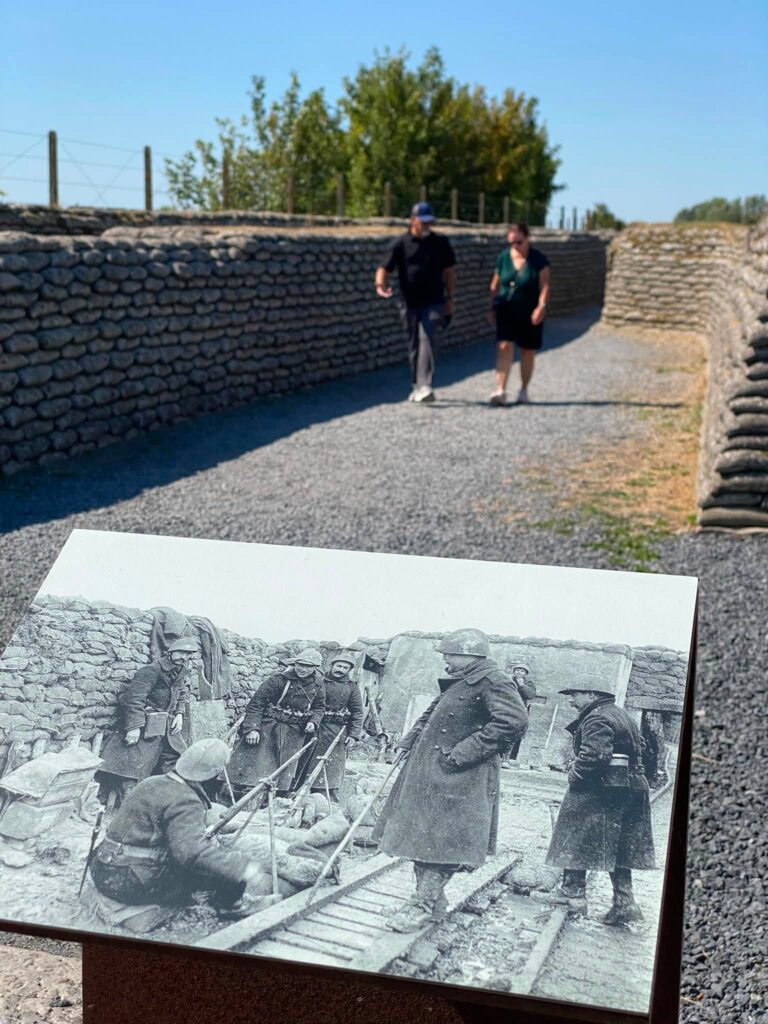
A grave tells you where he rests. It does not always tell you where he fought. Where the records show where his unit was, the route can include that ground too: the stretch of front, the village, the wood.
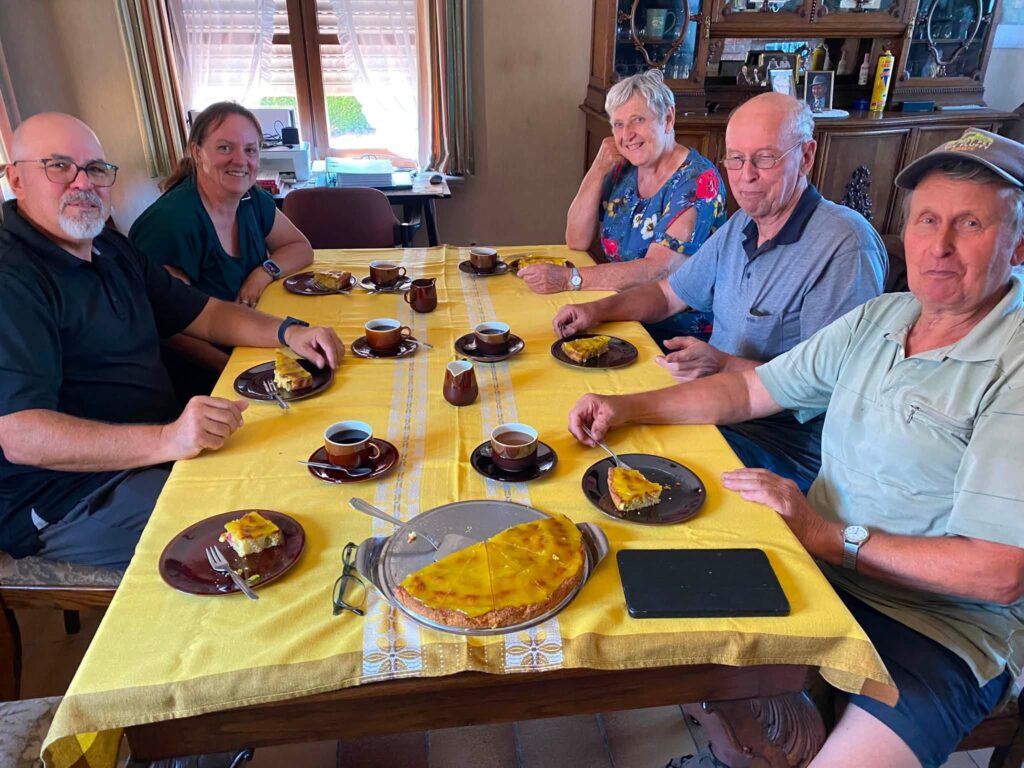
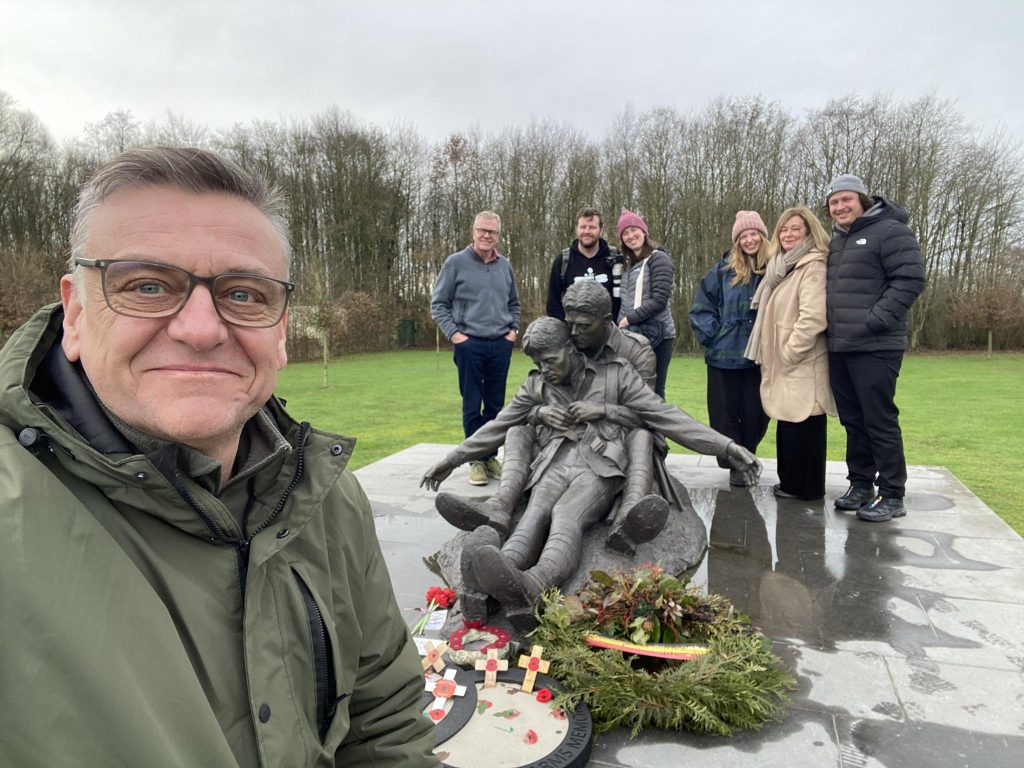
Some examples from past tours: a family from Colorado following their grandfather, a First World War veteran of the 2nd Infantry Division; the daughter of an American glider pilot, retracing her father’s war on a Brussels and Bastogne tour; and a group of six who came to honour a great-uncle killed in the First World War, 107 years earlier, with the local community gathered to share the moment with them.
At the graveside
Because every tour is private, the time at the grave is yours. There is no group waiting in the vehicle and no departure time to meet. A wreath or a cross can be arranged if you ask when booking.
If anyone travelling has limited mobility, say so in advance — routes are planned so the vehicle stops close to each site. The page on battlefield tours for veterans and their families covers pace and access in more detail.

War graves beyond Belgium
Not every search ends in Belgium. The Somme and Vimy Ridge in northern France, the Netherlands American Cemetery at Margraten and the Normandy beaches are all reachable from here. If the record points to one of them, the tour goes there — see battlefield tours in Belgium and beyond.
I have guided these battlefields since 2014, in English, Dutch, French and German. Transport is included from your hotel, the airport, a station or the harbour. Pricing is set out under battlefield tour prices in Belgium.
Call +32 497 645 645 or email peter@battlefields1.com with the name you are looking for.
War graves in Belgium — common questions
How do I find a war grave in Belgium?
Search the CWGC database for Commonwealth soldiers, the American Battle Monuments Commission for Americans, or the Volksbund for German soldiers. The record gives the cemetery, plot and row.
What if I only have a name?
A name with an approximate date is usually enough to start a search in the CWGC records. Send what you have and I will help narrow it down.
Can we visit more than one grave in a day?
Yes, as long as they are within reasonable driving distance. The route is planned around them.
Can a wreath or cross be laid?
Yes. Mention it when booking so it can be arranged in advance.
What if he has no known grave?
His name will be on a memorial, such as the Menin Gate or Tyne Cot. The visit is planned around that panel.