

Canadian battlefield tours in Belgium — the Canadian Corps in the Ypres Salient
Canadian battlefield tours often begin with Vimy Ridge, and for good reason. But Vimy lies in France. The Canadian war in Belgium came before and after it: the first great battle of the Canadian Expeditionary Force at St Julien in April 1915, the fighting at St Eloi and Mount Sorrel in 1916, and the capture of Passchendaele in November 1917.
All of it lies within a few miles of Ypres. This page sets out the Canadian sites in Belgium, how they fit into a private day, and how Vimy can be added.
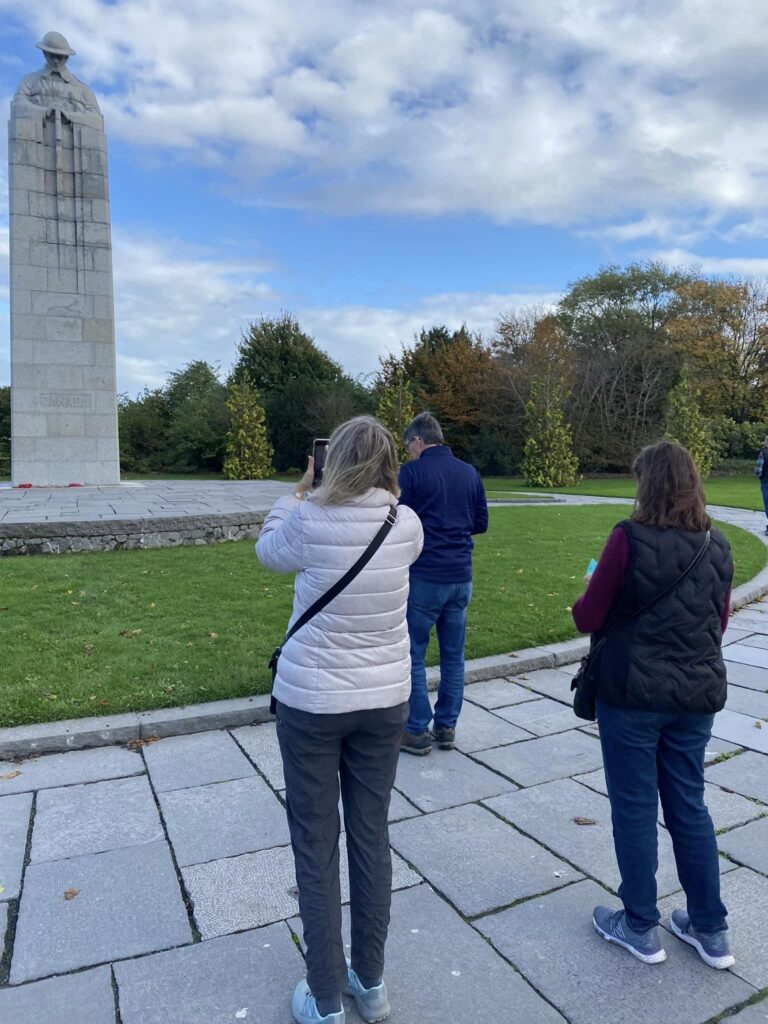
St Julien and the gas attack of April 1915
On the afternoon of 22 April 1915, German troops released chlorine gas from cylinders along the northern edge of the Salient. The French colonial and territorial troops in its path were overwhelmed, leaving a gap of several kilometres beside the 1st Canadian Division. That night the 10th and 16th Battalions counter-attacked into Kitchener’s Wood to close it. Two days later, on 24 April, the gas was released against the Canadians themselves, who had little more than wet cloths to breathe through.
Above the crossroads at Vancouver Corner stands the St Julien Memorial, known as the Brooding Soldier: the head and shoulders of a Canadian soldier, head bowed, rising out of a granite column. It was designed by Frederick Chapman Clemesha and unveiled in 1923. Standing beside it, you can see across the ground the gas drifted over.
Essex Farm and John McCrae
Lieutenant-Colonel John McCrae, a doctor from Guelph, Ontario, served as brigade surgeon with the 1st Brigade, Canadian Field Artillery, during Second Ypres. On 2 May 1915 his friend Lieutenant Alexis Helmer was killed, and McCrae wrote “In Flanders Fields” in the days that followed, near the concrete dressing station on the canal bank at Essex Farm. The poem was published in Punch that December and gave the poppy its meaning.
The bunkers you see today were built later in the war, but they stand on the same spot, and Essex Farm Cemetery lies beside them.
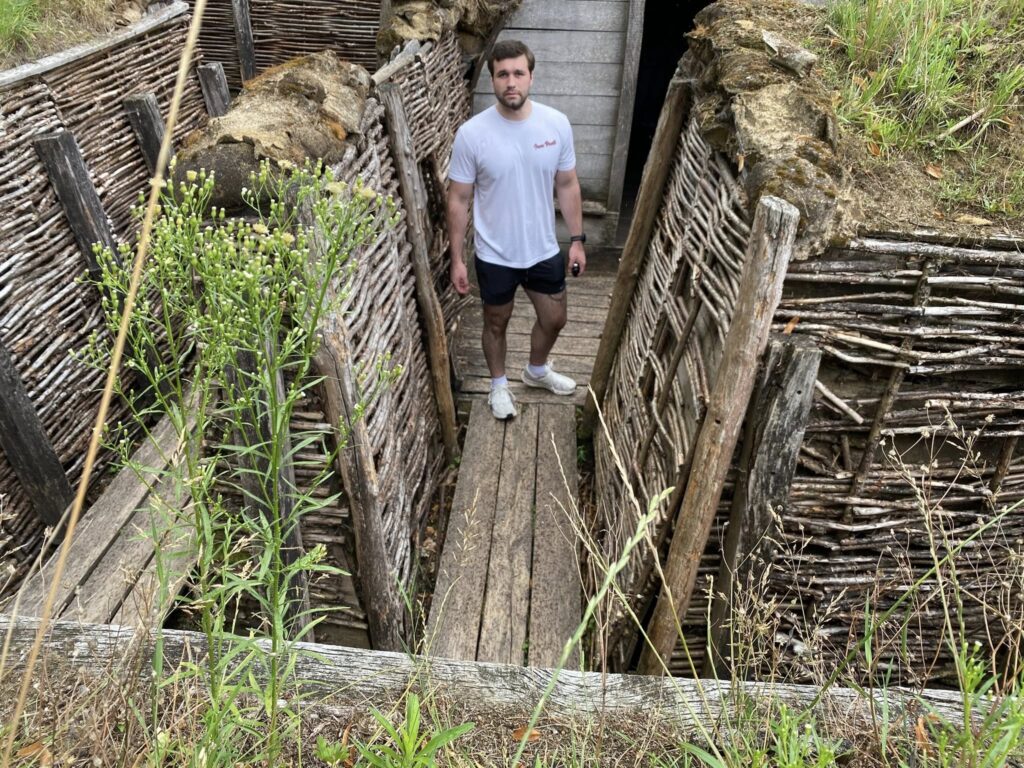
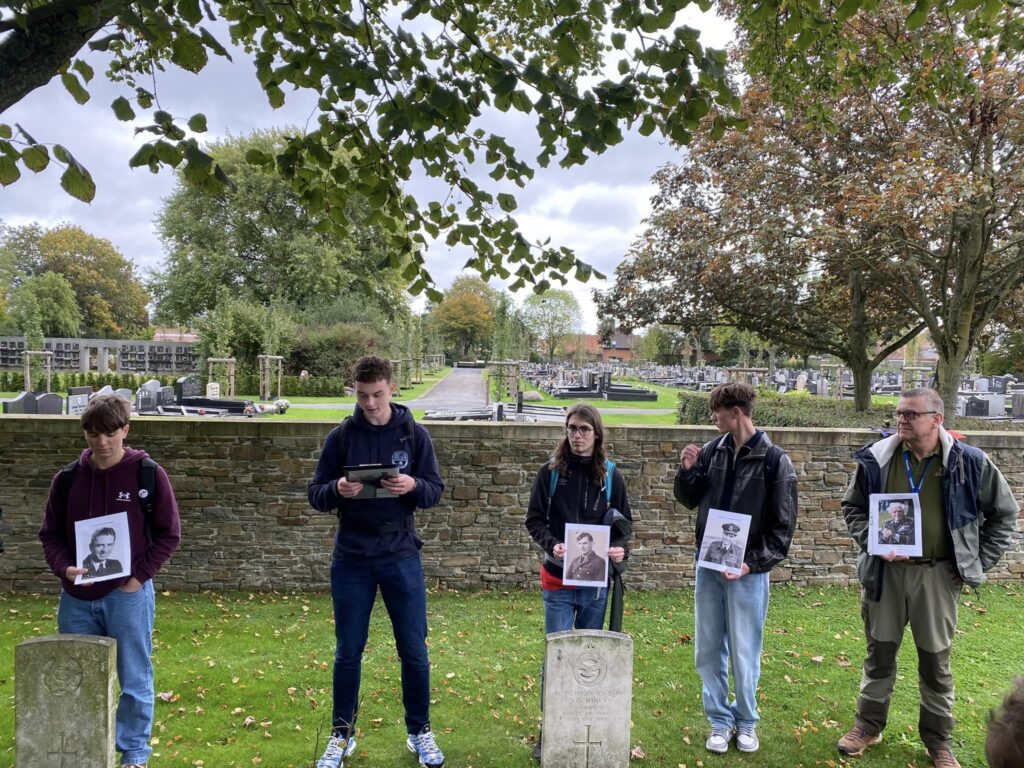
Hill 62, Mount Sorrel and St Eloi
On 2 June 1916 the Germans attacked the 3rd Canadian Division at Mount Sorrel, south-east of Ypres. Major-General Malcolm Mercer, the division’s commander, was killed — the most senior Canadian officer to die in the war. The ground was retaken on 13 June in a counter-attack. The Canadian memorial on Hill 62, in Sanctuary Wood, overlooks that ground, and the privately owned museum close by keeps a stretch of trench lines in the wood.
Two months earlier, in April 1916, the 2nd Canadian Division had its first major action in the mine craters at St Eloi, a few miles to the south-west. The craters can be included in the same half of the day.
Passchendaele and Crest Farm, October–November 1917
In October 1917 the Canadian Corps under Lieutenant-General Arthur Currie was sent to finish the Passchendaele offensive. Currie insisted on time to prepare. In a series of attacks between 26 October and 10 November, the Canadians took the ridge and the village, which fell on 6 November. The cost was more than 15,000 Canadian casualties, and nine Canadians were awarded the Victoria Cross.
The Canadian memorial at Crest Farm stands on the ground taken in the 30 October attack and looks up to the church in Passendale. The wider battle, including Tyne Cot, is on the page about the Passchendaele tour.
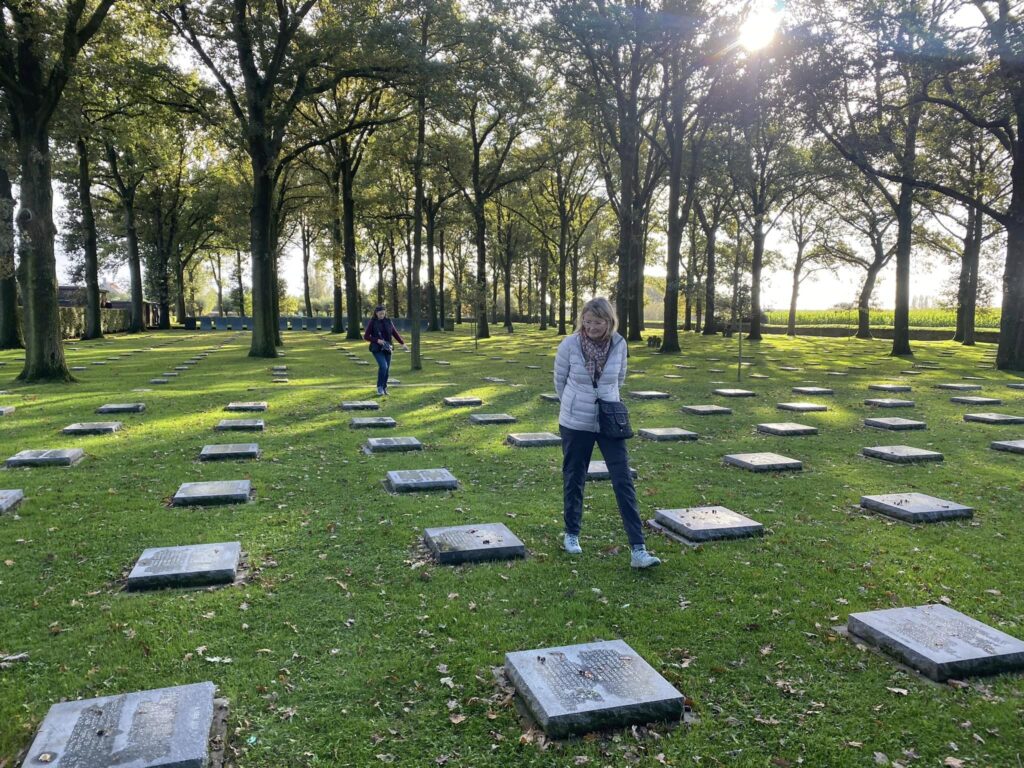

Finding a Canadian soldier
The service files of the Canadian Expeditionary Force are held and digitised by Library and Archives Canada, and every Canadian who died in the war is listed in the Canadian Virtual War Memorial kept by Veterans Affairs Canada. Canadians in Belgium with no known grave are named on the Menin Gate. Send me the name, the battalion and anything the family has, and the route is planned around where he served — the process is described on the page about tracing an ancestor’s war grave.
Vimy, the Somme and the Canadians of 1944
Vimy Ridge is in France, around an hour and a half by road from Ypres. With Beaumont-Hamel, where the Newfoundland Regiment attacked on 1 July 1916, it is best seen as a second day: see the Vimy and Somme battlefield tour.
The Canadian army returned to Belgium in the autumn of 1944 to clear the Scheldt estuary and open the port of Antwerp. Adegem Canadian War Cemetery, between Bruges and Ghent, holds more than 800 Canadians from that campaign — a stop that combines well with a day starting in Bruges or Ghent.
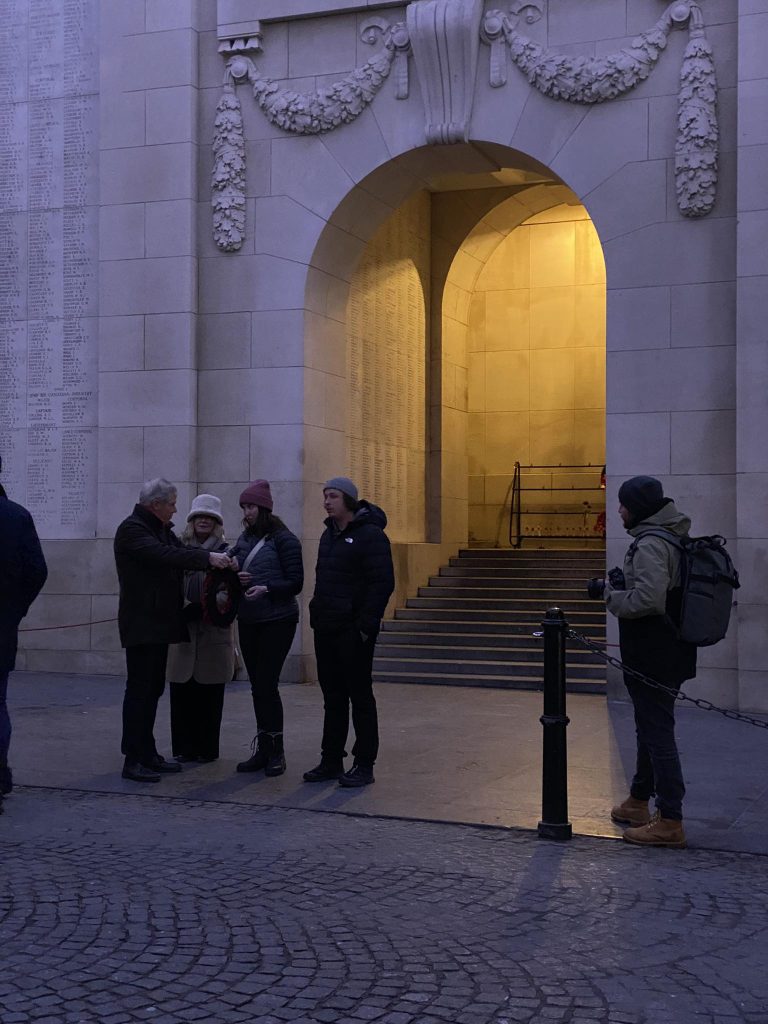

How the Canadian battlefield tour day runs
Pickup is from your hotel, a station or the airport in Brussels, from Antwerp, the cruise terminal at Zeebrugge, or your hotel in Ypres or Bruges, usually around 08:30. The day lasts roughly eight to ten hours. Transport is included in my own vehicle; school groups and associations travel by coach with a licensed professional driver.
I have guided these battlefields since 2014, in English, Dutch, French and German, after serving as First Sergeant in the Belgian Army Airborne. The day can end at the Last Post in Ypres at eight o’clock. What a day costs, and what is included, is explained under battlefield tour prices in Belgium. Call +32 497 645 645 or email peter@battlefields1.com.
Canadian battlefield tours — common questions
Is Vimy Ridge in Belgium?
No. Vimy is in northern France, about ninety minutes from Ypres. It can be added as a second day.
Can the tour follow one Canadian battalion?
Yes. Send the battalion number and the route follows its positions in Belgium.
Where are Canadians with no known grave in Belgium named?
On the Menin Gate in Ypres.
Can the tour be guided in French?
Yes. Tours are guided in English, French, Dutch and German.
Is this suitable for a Canadian school group?
Yes. Larger groups travel by coach, and the day is pitched to the age of the students.