

WW1 battlefield tours for British visitors — the Ypres Salient, privately guided
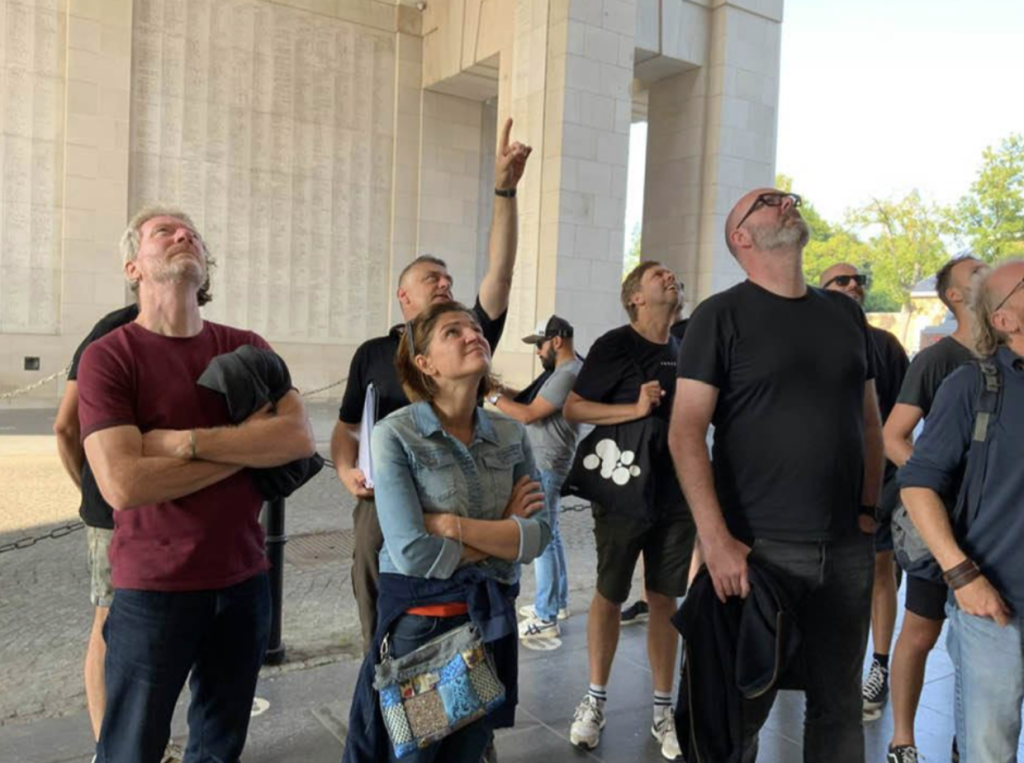
For British visitors, WW1 battlefield tours nearly always lead to Ypres. For four years the British Army held a bulge of ground around the town — the Ypres Salient — overlooked on three sides by German positions on the low ridges. Regiments from every county of England, from Scotland, Wales and Ireland served in it, and hardly a family in Britain is without someone who passed through the Menin Gate on his way to the line.
Today the Salient is a quiet landscape of farms and small towns, and it is compact: most of the places in this page lie within half an hour of the Grote Markt in Ypres. That makes it possible to see the whole arc of the British war in Flanders in a single private day, built around the regiments, the battles or the one name that brought you here.
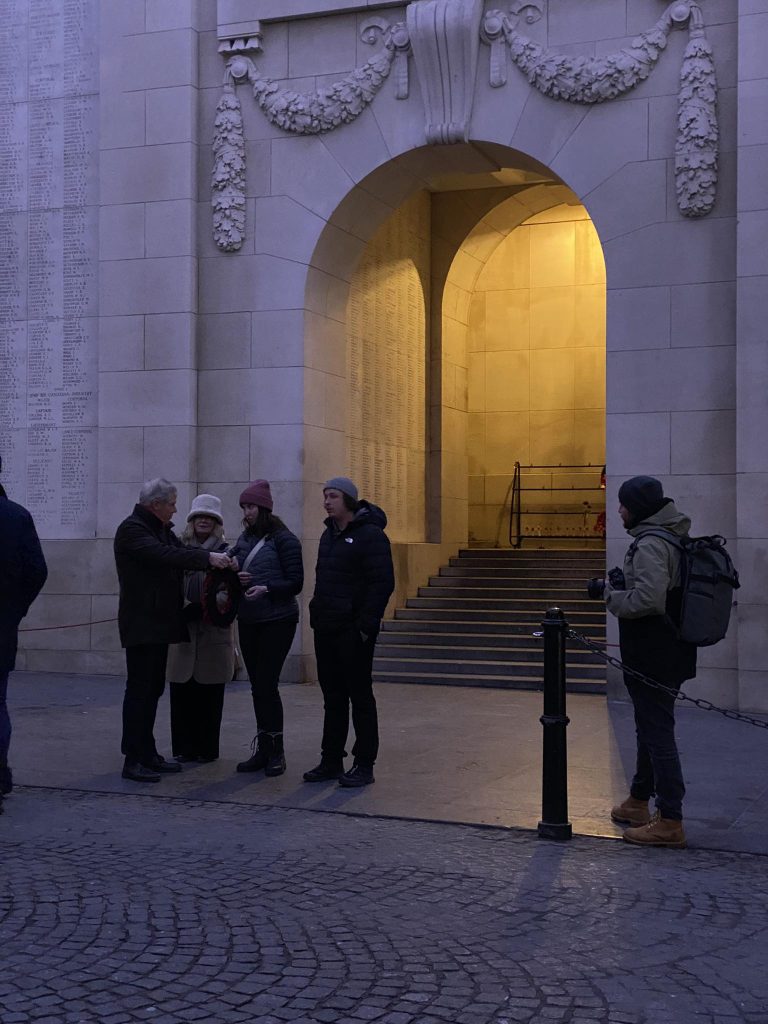
Four battles around Ypres, one British front
The British story here runs from the autumn of 1914 to the autumn of 1918.
First Ypres, October–November 1914. The regulars of the British Expeditionary Force stopped the German advance to the Channel ports, at a cost that all but destroyed the old professional army.
Second Ypres, April–May 1915. The first large-scale use of poison gas on the Western Front, and the fighting for Hill 60 and around St Julien and Frezenberg.
Messines and Third Ypres, 1917. The mines under Messines Ridge in June, followed from 31 July by the long offensive towards Passchendaele.
1918. The German spring offensive on the Lys pushed the line back towards Ypres before the final advance in the autumn.
On the ground you see where these battles overlap — which is why so many cemeteries lie so close together.
Messines Ridge and the mines of 7 June 1917
At dawn on 7 June 1917, nineteen mines dug by British, Canadian and Australian tunnelling companies were fired under the German line along Messines Ridge. The explosion was heard in England. Several craters remain; the largest, at Spanbroekmolen, is now a still pond known as the Pool of Peace.
A short drive away stands the Island of Ireland Peace Park, on the ground where the 36th (Ulster) and 16th (Irish) Divisions attacked side by side at Wytschaete that same morning. Hill 60 and the Caterpillar crater, at the northern end of the same tunnelling war, fit into the same half of the day.

Ploegsteert and the Christmas Truce
South of Messines lies Ploegsteert Wood — “Plugstreet” to the men who held it. Along parts of this sector, British and German soldiers met in no man’s land at Christmas 1914. A small memorial near Saint-Yvon marks the truce, and the cemeteries in and around the wood are among the most peaceful in Flanders.
The Ploegsteert Memorial, guarded by two stone lions, records more than 11,000 soldiers of the United Kingdom and South Africa who died in this southern sector and have no known grave. If your relative served south of Ypres rather than in the Salient itself, his name may be here rather than on the Menin Gate.
Poperinge, Talbot House and Lijssenthoek
Behind the line, Poperinge was where the British Army rested, trained and was treated. Talbot House, opened in December 1915 by the army chaplain Philip “Tubby” Clayton as a club where rank did not count, still stands, and its upper-room chapel is unchanged. A few miles away, Lijssenthoek Military Cemetery grew beside a cluster of casualty clearing stations into the second-largest Commonwealth cemetery in Belgium, with nearly 11,000 burials.
At Essex Farm, north of Ypres, the grave of Rifleman Valentine Strudwick of the Rifle Brigade, killed in January 1916 at the age of fifteen, is one of the stops British guests remember most. The full Passchendaele day, including Tyne Cot, is described on the page about the Passchendaele tour, and the evening ceremony on the page about the Menin Gate Last Post tour.
Finding a British soldier before you travel
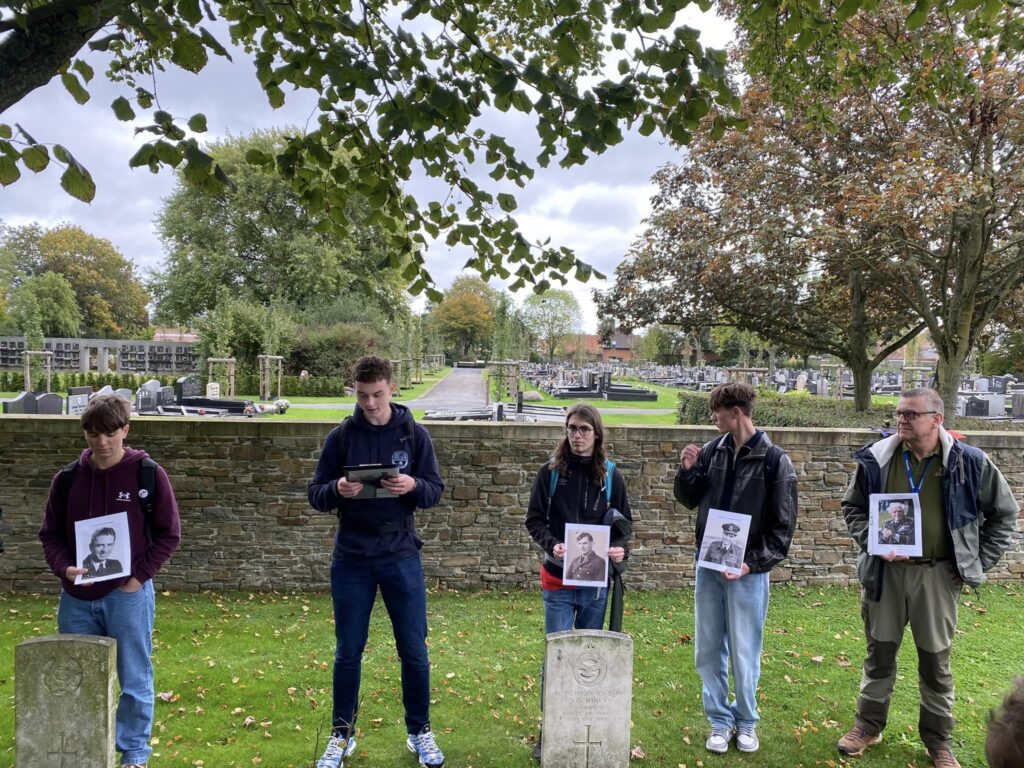
Start with the Commonwealth War Graves Commission for anyone who died: it gives the cemetery and plot, or the memorial panel. For men who survived, or to learn more about those who did not, the medal index cards and war diaries at The National Archives are the next step. Be aware that a large part of the British Army’s First World War service records was destroyed by bombing in 1940, so a missing file is common and not the end of the search.
Send me what you find — the regiment, the battalion, a date — and I prepare the day around where that battalion was. How that works is set out on the page about tracing an ancestor’s war grave.
Getting to Ypres from Britain
Many British guests drive over. From the Eurotunnel terminal or the ferry port at Calais, Ypres is roughly an hour by road, so an overnight stay in Ypres and a pickup at your hotel the next morning works well. Others come by Eurostar: a train into Lille or Brussels, with the start time set to your arrival. Pickup from hotels in Ypres, Brussels, Antwerp and Bruges is standard, around 08:30, and the day runs roughly eight to ten hours in my own vehicle; larger regimental or school groups travel by coach with a licensed professional driver.
The British war does not stop at the border. The Somme, with Thiepval and the 1 July 1916 battlefield, can be added as a second day — see the Vimy and Somme battlefield tour — and the 1940 evacuation of the BEF is covered on the Dunkirk tour.
I served as First Sergeant in the Belgian Army Airborne, 1st Para Battalion, and have guided these battlefields since 2014; my qualifications are on the page about hiring a private WWI battlefield guide. How a day is priced is explained under battlefield tour prices in Belgium. Call +32 497 645 645 or email peter@battlefields1.com.
WW1 battlefield tours for British visitors — common questions
Can the tour follow one regiment?
Yes. Send the regiment and battalion, and the route is built around the places and dates in its war diary.
Is Ypres or the Somme better for a first visit?
For a single day from Belgium, Ypres. The Somme is about two hours away and is better as its own day.
Can we be picked up in Ypres after crossing from Calais?
Yes. Pickup from your hotel in Ypres is one of the standard options.
Are German cemeteries included?
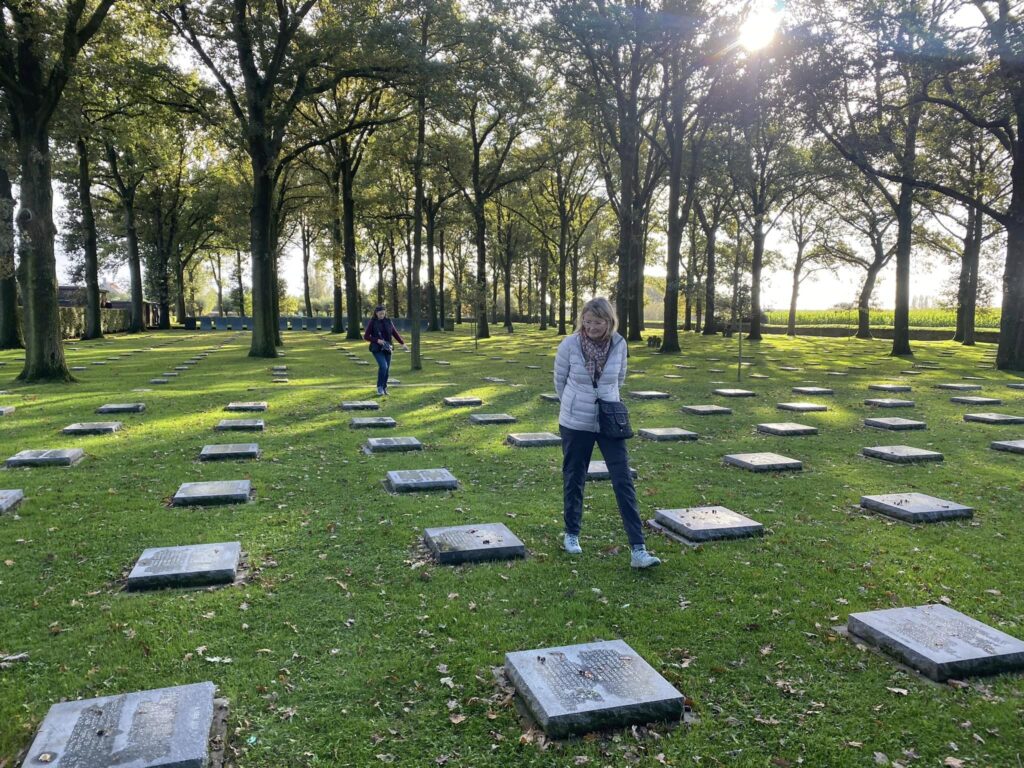
They can be. Langemark lies within the Salient and fits easily into the day.
Can we come for the 11 November commemorations?
Yes, but book early. Ypres is very busy around Armistice Day.