

Battlefield tour from Bruges — a private day trip to Ypres and back
Bruges to Ypres is one of the most common day trips in Belgium, and for good reason: the medieval city where you are staying lies less than an hour’s drive from the front line of the First World War. Many visitors only realise how close the battlefields are once they have arrived in Bruges.
A private battlefield tour from Bruges collects you at your hotel in the morning, spends the day in Flanders Fields, and brings you back in the evening — after the Last Post at the Menin Gate if you want to stay for it.
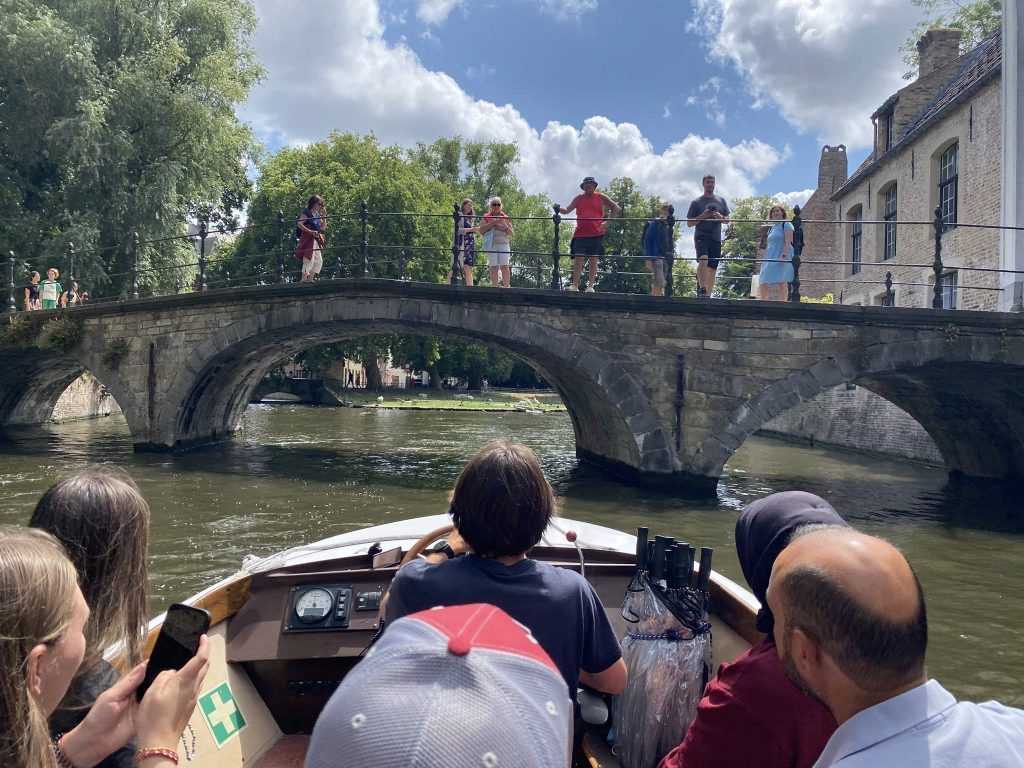
Getting from Bruges to Ypres
By road, Bruges to Ypres is around 60 kilometres, which takes roughly 45 minutes to an hour. By public transport it is slower: the train usually needs a change at Kortrijk, and the stations in Ypres and Bruges are not where the battlefields are. Once in Ypres, the cemeteries and memorials are spread across the countryside, most of them well away from any bus route.
That is the practical case for a private tour from Bruges. The vehicle goes from your hotel to Tyne Cot, Hill 60 and the small cemeteries in between without waiting, and the time saved goes to the places themselves.
The Yser front on the way — Nieuwpoort and Diksmuide
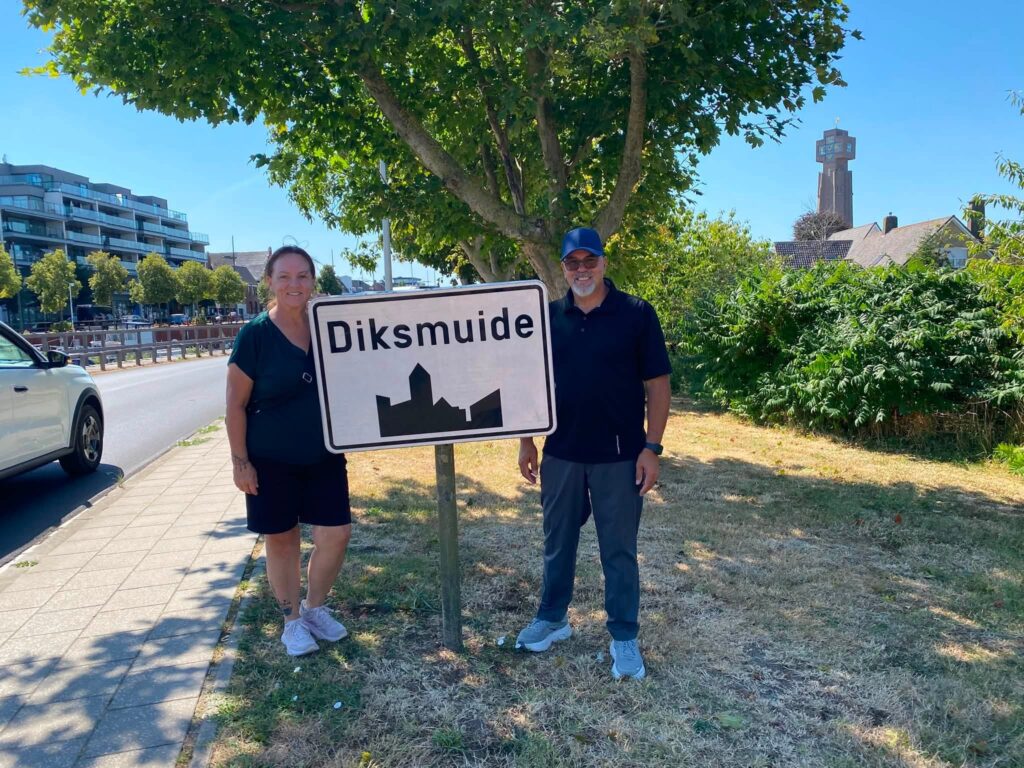
From Bruges, the road to Ypres can run through the part of the front held by the Belgian army, which most British and American itineraries leave out. In October 1914, at the end of the Battle of the Yser, Belgian engineers opened the sluices at Nieuwpoort and flooded the low land between the coast and Diksmuide, stopping the German advance. The King Albert I Memorial at Nieuwpoort stands beside those sluices.
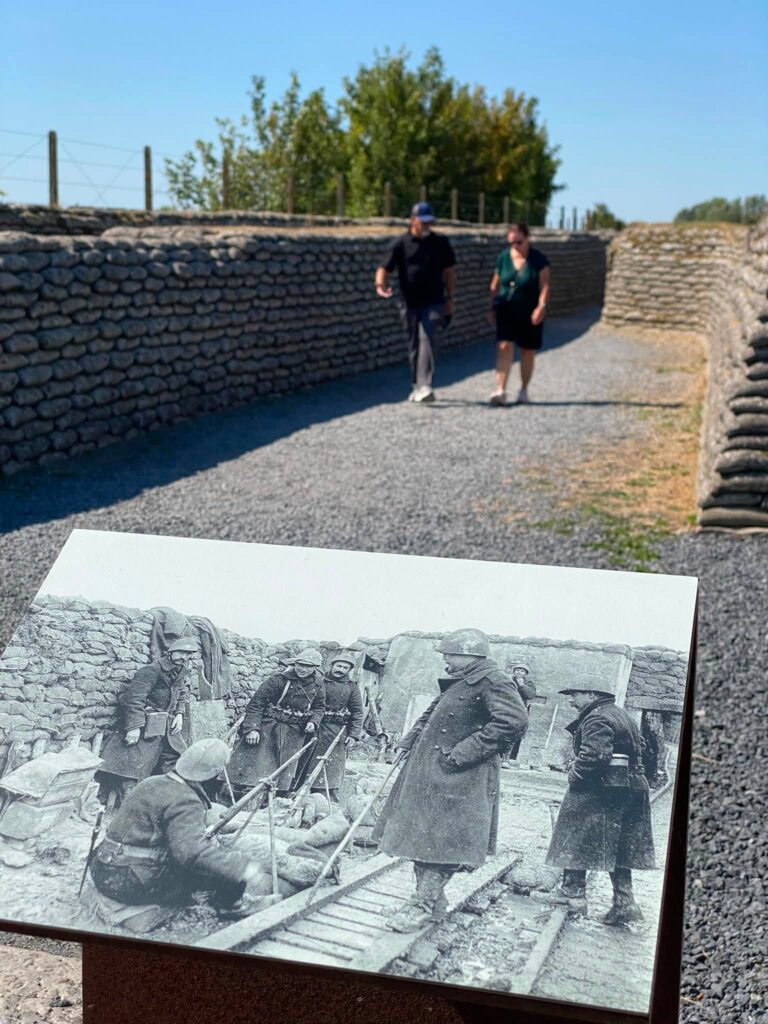
Near Diksmuide, the Trench of Death — the Dodengang — is a stretch of Belgian trench held from 1915 to 1918, only metres from the German line, and now restored. The tall Yser Tower nearby houses a museum on the war and on Flemish remembrance. Both fit into the first part of the morning.
Flanders Fields and the Ypres Salient
From Diksmuide it is a short drive to the northern edge of the Salient. Langemark German Military Cemetery, with more than 44,000 burials, shows the other side of the line. From there the day continues to the sites most visitors come for — Tyne Cot, Zonnebeke, Hill 60 and Essex Farm — at the pace you choose. The general Flanders day is described on the WW1 Flanders Fields tour page, and the 1917 battle in detail on the Passchendaele tour page.
For the history before you go, the In Flanders Fields Museum in the Cloth Hall in Ypres is the best introduction and can be included in the day.
Ending at the Menin Gate and getting back to Bruges
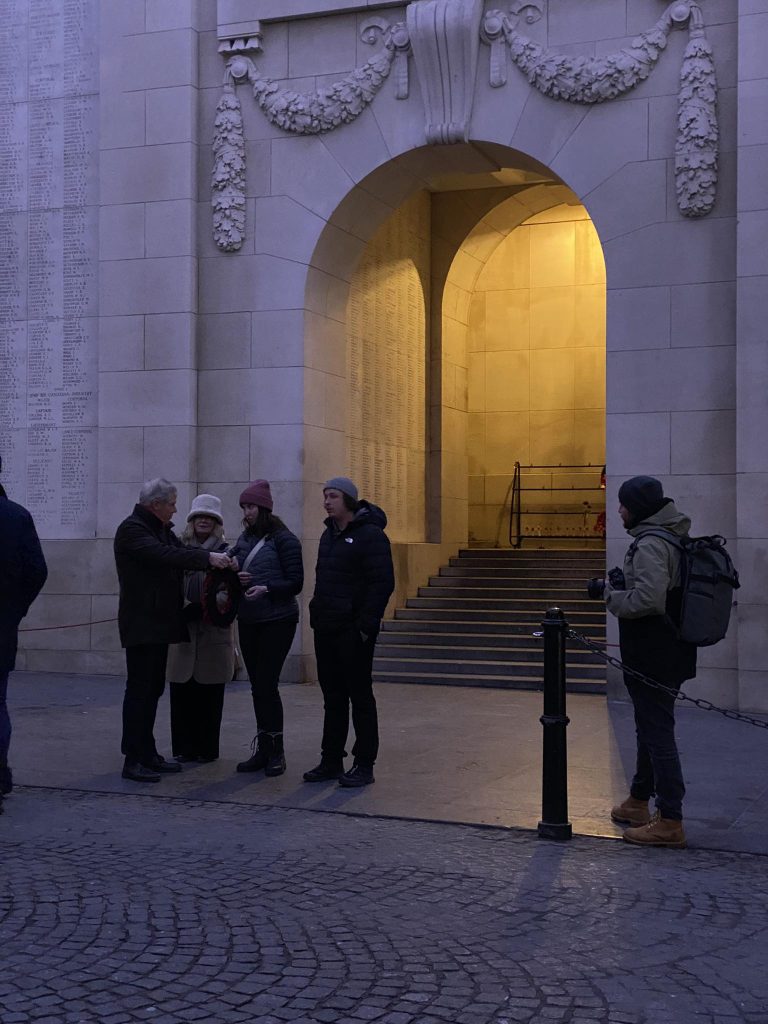
The Last Post is sounded at the Menin Gate every evening at eight. On public transport, staying for it means a late and uncertain journey back to Bruges. On a private tour the vehicle is waiting at the end of the ceremony, and you are back at your hotel in Bruges within about an hour. The ceremony itself is described on the page about the Menin Gate Last Post tour.

Dunkirk and Flanders Fields from Bruges
Bruges lies between two battlefields. Dunkirk is around an hour away by road in one direction, Ypres in the other. The Dunkirk and Flanders Fields day tour starts at your hotel in Bruges at 08:30, spends the morning on the East Mole and the beaches of the 1940 evacuation, and ends at the Last Post in Ypres the same evening.
Second World War sites near Bruges
The coast around Bruges has its own Second World War story. At Raversijde near Ostend, the Atlantikwall open-air museum preserves German coastal bunkers and gun positions. Between Bruges and Ghent, Adegem Canadian War Cemetery holds the Canadians who fell clearing the Leopold Canal and the Scheldt in the autumn of 1944. Either can replace part of a Flanders day or make a shorter half day.
Bruges itself, with a permitted guide
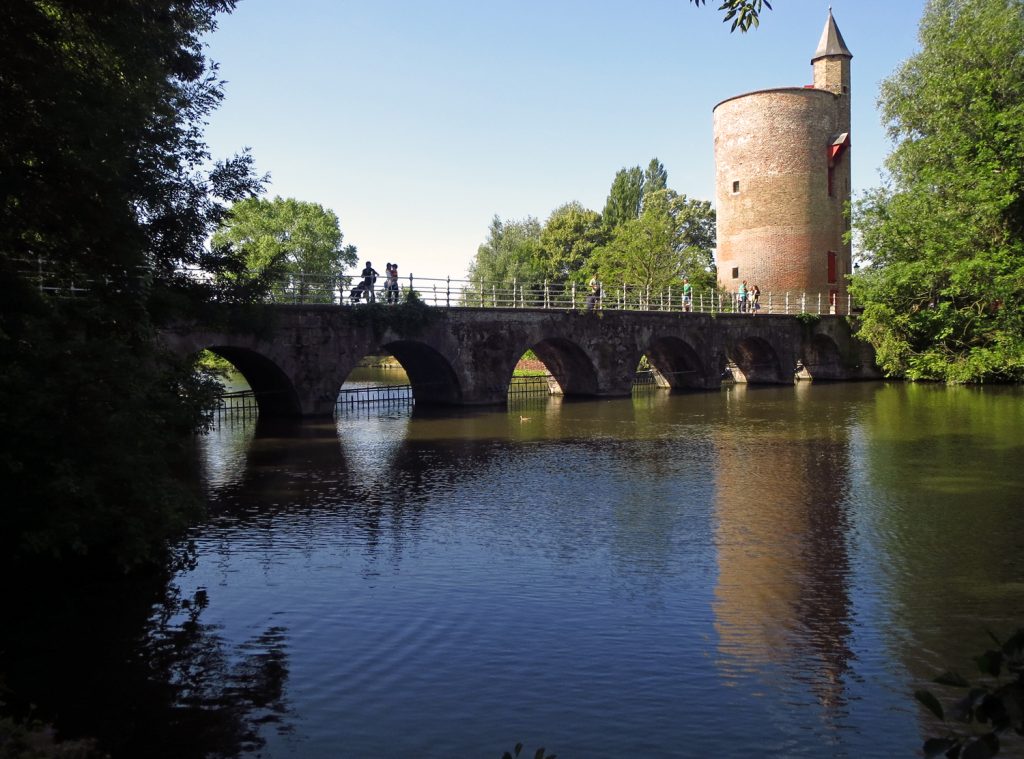
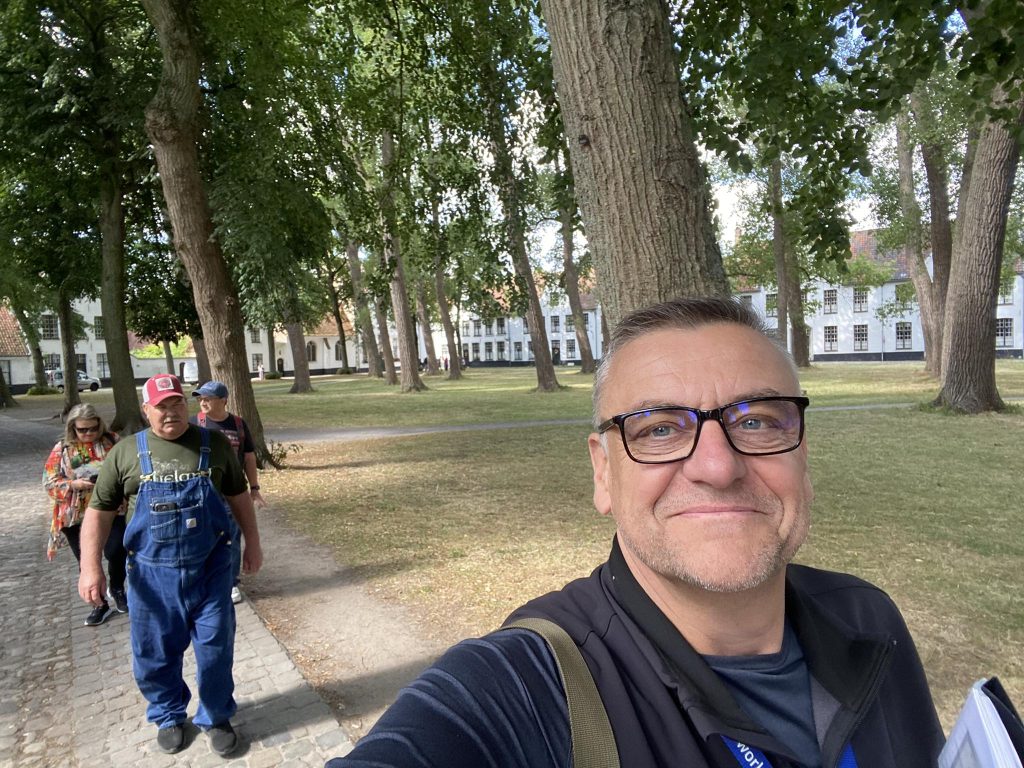
I am also a permitted guide in the city of Bruges for walking tours. If your stay allows a second day, the Bruges private day tour walks the old centre — the Begijnhof, the Belfry, the Basilica of the Holy Blood — at the same private pace.
How the day from Bruges runs
Pickup is from your hotel in Bruges at around 08:30, or at a time that suits you. The old centre of Bruges is closed to most traffic, so for some hotels the meeting point is the nearest street the vehicle can reach; this is agreed when you book. The day runs roughly eight to ten hours, or longer with the Last Post. You travel in my own vehicle, and a coach with a licensed professional driver is arranged for bigger parties.
I have guided these battlefields since 2014, in English, Dutch, French and German. The pricing basis — per tour, not per person — is on the page about battlefield tour prices in Belgium. Call +32 497 645 645 or email peter@battlefields1.com.
Battlefield tour from Bruges — common questions
How far is Ypres from Bruges?
Around 60 kilometres, roughly 45 minutes to an hour by road.
Can I go from Bruges to Ypres by train?
Yes, usually with a change at Kortrijk. The battlefields themselves are outside Ypres and hard to reach without a vehicle.
Can we see the Last Post and still get back to Bruges?
Yes. The vehicle waits after the ceremony and you are back in Bruges about an hour later.
Can a half day be done from Bruges?
Yes. A half day covers the Yser front or a few sites in the Salient, without the Last Post.
Is pickup possible inside the old centre?
Where the vehicle can reach your hotel, yes. Otherwise the meeting point is the nearest accessible street.