Bastogne War Museum and the Bastogne perimeter in one private day
The Bastogne War Museum is the place most visitors to the Ardennes start. It opened in 2014 on the hill outside the town, beside the Mardasson Memorial, and it tells the story of the Second World War from its causes through to the Battle of the Bulge, with the siege of Bastogne at its centre.
A museum gives you the story. The ground around Bastogne gives you the scale of it: the woods where the paratroopers dug in, the villages they held, the square named after the general who refused to surrender. This page explains how the two fit together in a single day.
I’ve had the honor of guiding visitors from all over the world including many from the United States who come to Belgium to explore its historic battlefields and gain a deeper understanding of the events that shaped our history.
The museum takes the visitor from the years before 1939 through the occupation of Belgium to the German offensive of December 1944. Much of it is told through the eyes of a few characters, soldiers and civilians, which brings the experience of the people of Bastogne into the same frame as the American and German armies. Uniforms, vehicles and personal objects fill the galleries, and several immersive rooms put you inside moments of the siege.
Allow around two hours if you want to see it properly. The museum publishes its own opening times and admission prices at bastognewarmuseum.be; entry is not part of the tour price, which covers the guiding and the transport.
A few steps from the museum entrance stands the Mardasson Memorial, dedicated on 16 July 1950. It is built in the shape of a five-pointed star, and the names of the then 48 American states are carved around its walls, together with the story of the battle. From the terrace on top you look out over the country the 101st Airborne defended. In the crypt below, the mosaics are the work of the French artist Fernand Léger.
The memorial is free and open, and it is the natural place to stand before going out to the ground itself.
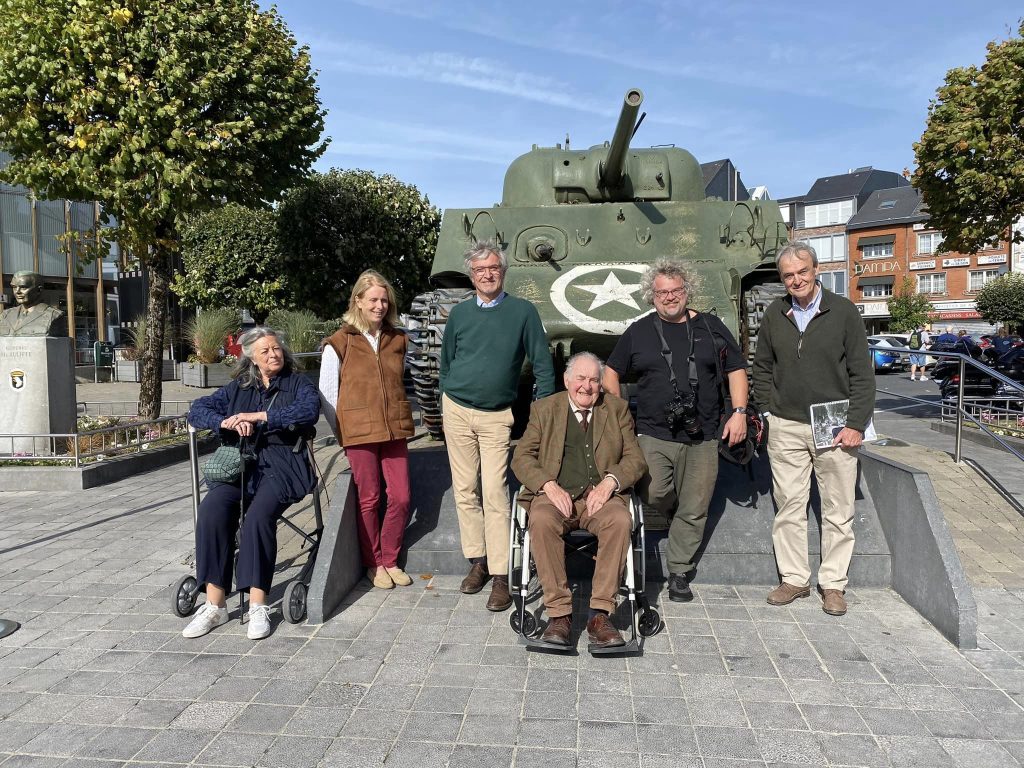
On 22 December 1944, German officers came forward under a white flag with a demand for the surrender of Bastogne. Brigadier General Anthony McAuliffe, acting commander of the 101st Airborne, sent back one word: “Nuts!” The headquarters where it was written stood in what is now Bastogne Barracks, and in the centre of town McAuliffe Square has a Sherman tank and a bust of the general.
The 101st Airborne Museum, in the former officers’ mess of the Belgian Army, shows the siege from inside the perimeter, and it can replace or follow the War Museum depending on how much indoor time your group wants.
North-east of the town, the foxholes of the 506th Parachute Infantry Regiment are still visible in the Bois Jacques, the wood the men called Jack’s Wood. Easy Company held this line from 20 December 1944 until early January, looking out over the village of Foy, which they attacked across open ground on 13 January 1945. Historical photographs are shown on the spot, so you see the same tree line then and now.
Most days start with the museum in the morning, while you are fresh, then the Mardasson and lunch in Bastogne. The afternoon goes out to the perimeter: the Bois Jacques, Foy and, time allowing, Noville or the positions held by the 10th Armored Division. The order can be reversed if you prefer the woods in the morning light. The siege lasted from 20 December until Patton’s Third Army broke through on 26 December, and the route follows that story around the town.
I am an official and permitted guide at the Battle of the Bulge sites in Bastogne, and I served as First Sergeant in the Belgian Army Airborne, 1st Para Battalion, so I read the ground around the town the way a paratrooper was trained to. The wider battle, from the northern shoulder to Luxembourg, is on the page about the Battle of the Bulge tour.
Bastogne lies a little under two hours by road from Brussels. Pickup is from your hotel, the station or Brussels airport, usually around 08:30, and the day runs roughly eight to ten hours. You travel in my own vehicle; larger groups go by coach with a licensed professional driver. How a day is priced is explained under battlefield tour prices in Belgium.
Call +32 497 645 645 or email peter@battlefields1.com with your dates, the size of your group and whether the museum is a must.